Stillingsmal duplikat 3
This is a custom heading element.
Lorem ipsum dolor sit amet consectetur adipiscing elit. Quisque faucibus ex sapien vitae pellentesque sem placerat. In id cursus mi pretium tellus duis convallis. Tempus leo eu aenean sed diam urna tempor. Pulvinar vivamus fringilla lacus nec metus bibendum egestas. Iaculis massa nisl malesuada lacinia integer nunc posuere. Ut hendrerit semper vel class aptent taciti sociosqu. Ad litora torquent per conubia nostra inceptos himenaeos.
Lorem ipsum dolor sit amet consectetur adipiscing elit. Quisque faucibus ex sapien vitae pellentesque sem placerat. In id cursus mi pretium tellus duis convallis. Tempus leo eu aenean sed diam urna tempor. Pulvinar vivamus fringilla lacus nec metus bibendum egestas. Iaculis massa nisl malesuada lacinia integer nunc posuere. Ut hendrerit semper vel class aptent taciti sociosqu. Ad litora torquent per conubia nostra inceptos himenaeos.
This is a custom heading element.
Lorem ipsum dolor sit amet consectetur adipiscing elit. Quisque faucibus ex sapien vitae pellentesque sem placerat. In id cursus mi pretium tellus duis convallis. Tempus leo eu aenean sed diam urna tempor. Pulvinar vivamus fringilla lacus nec metus bibendum egestas. Iaculis massa nisl malesuada lacinia integer nunc posuere. Ut hendrerit semper vel class aptent taciti sociosqu. Ad litora torquent per conubia nostra inceptos himenaeos.
Lorem ipsum dolor sit amet consectetur adipiscing elit. Quisque faucibus ex sapien vitae pellentesque sem placerat. In id cursus mi pretium tellus duis convallis. Tempus leo eu aenean sed diam urna tempor. Pulvinar vivamus fringilla lacus nec metus bibendum egestas. Iaculis massa nisl malesuada lacinia integer nunc posuere. Ut hendrerit semper vel class aptent taciti sociosqu. Ad litora torquent per conubia nostra inceptos himenaeos.
This is a custom heading element.
I am text block. Click edit button to change this text. Lorem ipsum dolor sit amet, consectetur adipiscing elit. Ut elit tellus, luctus nec ullamcorper mattis, pulvinar dapibus leo.
- UX research
- Brand strategy
- Positioning
- Product design
- Management
- User experience
- User interface
- Development
- Illustration
- Motion & Video
Stillingsmal duplikat 2
This is a custom heading element.
Lorem ipsum dolor sit amet consectetur adipiscing elit. Quisque faucibus ex sapien vitae pellentesque sem placerat. In id cursus mi pretium tellus duis convallis. Tempus leo eu aenean sed diam urna tempor. Pulvinar vivamus fringilla lacus nec metus bibendum egestas. Iaculis massa nisl malesuada lacinia integer nunc posuere. Ut hendrerit semper vel class aptent taciti sociosqu. Ad litora torquent per conubia nostra inceptos himenaeos.
Lorem ipsum dolor sit amet consectetur adipiscing elit. Quisque faucibus ex sapien vitae pellentesque sem placerat. In id cursus mi pretium tellus duis convallis. Tempus leo eu aenean sed diam urna tempor. Pulvinar vivamus fringilla lacus nec metus bibendum egestas. Iaculis massa nisl malesuada lacinia integer nunc posuere. Ut hendrerit semper vel class aptent taciti sociosqu. Ad litora torquent per conubia nostra inceptos himenaeos.
This is a custom heading element.
Lorem ipsum dolor sit amet consectetur adipiscing elit. Quisque faucibus ex sapien vitae pellentesque sem placerat. In id cursus mi pretium tellus duis convallis. Tempus leo eu aenean sed diam urna tempor. Pulvinar vivamus fringilla lacus nec metus bibendum egestas. Iaculis massa nisl malesuada lacinia integer nunc posuere. Ut hendrerit semper vel class aptent taciti sociosqu. Ad litora torquent per conubia nostra inceptos himenaeos.
Lorem ipsum dolor sit amet consectetur adipiscing elit. Quisque faucibus ex sapien vitae pellentesque sem placerat. In id cursus mi pretium tellus duis convallis. Tempus leo eu aenean sed diam urna tempor. Pulvinar vivamus fringilla lacus nec metus bibendum egestas. Iaculis massa nisl malesuada lacinia integer nunc posuere. Ut hendrerit semper vel class aptent taciti sociosqu. Ad litora torquent per conubia nostra inceptos himenaeos.
This is a custom heading element.
I am text block. Click edit button to change this text. Lorem ipsum dolor sit amet, consectetur adipiscing elit. Ut elit tellus, luctus nec ullamcorper mattis, pulvinar dapibus leo.
- UX research
- Brand strategy
- Positioning
- Product design
- Management
- User experience
- User interface
- Development
- Illustration
- Motion & Video
Stillingsmal duplikat 1
This is a custom heading element.
Lorem ipsum dolor sit amet consectetur adipiscing elit. Quisque faucibus ex sapien vitae pellentesque sem placerat. In id cursus mi pretium tellus duis convallis. Tempus leo eu aenean sed diam urna tempor. Pulvinar vivamus fringilla lacus nec metus bibendum egestas. Iaculis massa nisl malesuada lacinia integer nunc posuere. Ut hendrerit semper vel class aptent taciti sociosqu. Ad litora torquent per conubia nostra inceptos himenaeos.
Lorem ipsum dolor sit amet consectetur adipiscing elit. Quisque faucibus ex sapien vitae pellentesque sem placerat. In id cursus mi pretium tellus duis convallis. Tempus leo eu aenean sed diam urna tempor. Pulvinar vivamus fringilla lacus nec metus bibendum egestas. Iaculis massa nisl malesuada lacinia integer nunc posuere. Ut hendrerit semper vel class aptent taciti sociosqu. Ad litora torquent per conubia nostra inceptos himenaeos.
This is a custom heading element.
Lorem ipsum dolor sit amet consectetur adipiscing elit. Quisque faucibus ex sapien vitae pellentesque sem placerat. In id cursus mi pretium tellus duis convallis. Tempus leo eu aenean sed diam urna tempor. Pulvinar vivamus fringilla lacus nec metus bibendum egestas. Iaculis massa nisl malesuada lacinia integer nunc posuere. Ut hendrerit semper vel class aptent taciti sociosqu. Ad litora torquent per conubia nostra inceptos himenaeos.
Lorem ipsum dolor sit amet consectetur adipiscing elit. Quisque faucibus ex sapien vitae pellentesque sem placerat. In id cursus mi pretium tellus duis convallis. Tempus leo eu aenean sed diam urna tempor. Pulvinar vivamus fringilla lacus nec metus bibendum egestas. Iaculis massa nisl malesuada lacinia integer nunc posuere. Ut hendrerit semper vel class aptent taciti sociosqu. Ad litora torquent per conubia nostra inceptos himenaeos.
This is a custom heading element.
I am text block. Click edit button to change this text. Lorem ipsum dolor sit amet, consectetur adipiscing elit. Ut elit tellus, luctus nec ullamcorper mattis, pulvinar dapibus leo.
- UX research
- Brand strategy
- Positioning
- Product design
- Management
- User experience
- User interface
- Development
- Illustration
- Motion & Video
Stillingsmal for duplisering
This is a custom heading element.
Lorem ipsum dolor sit amet consectetur adipiscing elit. Quisque faucibus ex sapien vitae pellentesque sem placerat. In id cursus mi pretium tellus duis convallis. Tempus leo eu aenean sed diam urna tempor. Pulvinar vivamus fringilla lacus nec metus bibendum egestas. Iaculis massa nisl malesuada lacinia integer nunc posuere. Ut hendrerit semper vel class aptent taciti sociosqu. Ad litora torquent per conubia nostra inceptos himenaeos.
Lorem ipsum dolor sit amet consectetur adipiscing elit. Quisque faucibus ex sapien vitae pellentesque sem placerat. In id cursus mi pretium tellus duis convallis. Tempus leo eu aenean sed diam urna tempor. Pulvinar vivamus fringilla lacus nec metus bibendum egestas. Iaculis massa nisl malesuada lacinia integer nunc posuere. Ut hendrerit semper vel class aptent taciti sociosqu. Ad litora torquent per conubia nostra inceptos himenaeos.
This is a custom heading element.
Lorem ipsum dolor sit amet consectetur adipiscing elit. Quisque faucibus ex sapien vitae pellentesque sem placerat. In id cursus mi pretium tellus duis convallis. Tempus leo eu aenean sed diam urna tempor. Pulvinar vivamus fringilla lacus nec metus bibendum egestas. Iaculis massa nisl malesuada lacinia integer nunc posuere. Ut hendrerit semper vel class aptent taciti sociosqu. Ad litora torquent per conubia nostra inceptos himenaeos.
Lorem ipsum dolor sit amet consectetur adipiscing elit. Quisque faucibus ex sapien vitae pellentesque sem placerat. In id cursus mi pretium tellus duis convallis. Tempus leo eu aenean sed diam urna tempor. Pulvinar vivamus fringilla lacus nec metus bibendum egestas. Iaculis massa nisl malesuada lacinia integer nunc posuere. Ut hendrerit semper vel class aptent taciti sociosqu. Ad litora torquent per conubia nostra inceptos himenaeos.
This is a custom heading element.
I am text block. Click edit button to change this text. Lorem ipsum dolor sit amet, consectetur adipiscing elit. Ut elit tellus, luctus nec ullamcorper mattis, pulvinar dapibus leo.
- UX research
- Brand strategy
- Positioning
- Product design
- Management
- User experience
- User interface
- Development
- Illustration
- Motion & Video
Together for Health: Advancing Safe Surgical Care through Policy and Advocacy
While 5 billion people lack access to safe, affordable surgery, the solution is not surgery alone. Ensuring patients can access the safe surgery they need requires research to understand barriers, policy to turn data into action and collaboration to build sustainable systems.
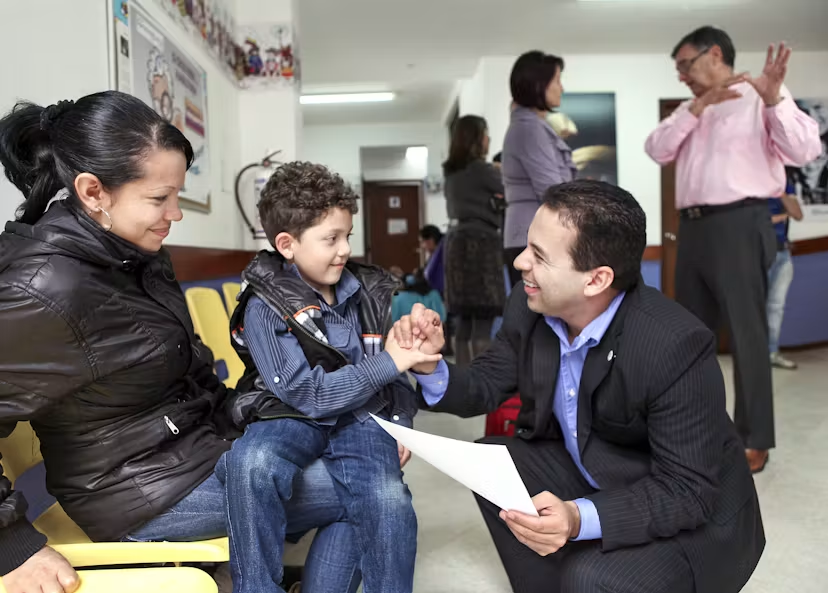
Ruben Ayala, M.D., M.Sc., our chief of policy and advocacy, has been part of Operation Smile since he was 16. From volunteering as a translator in his hometown in Panama to leading global initiatives and partnerships with ministries of health, universities, NGOs and multilateral organizations (like the United Nations), Ayala has witnessed firsthand how research, partnerships and policy can extend care to entire communities. In this Q&A, he shares how advocacy turns knowledge into action to expand access to care for children, their families and their communities.
Q: Can you tell us about your background and how you became involved with Operation Smile?
Ruben Ayala: I’m a public health physician who became involved with Operation Smile during my teenage years as a translator in my hometown of David, Panama. There was a coalition of civic clubs supporting Operation Smile in Panama, and I reached out to volunteer. The first time I became involved was the first time I ever saw children with cleft conditions. It marked me personally, and over the years, I’ve seen the commitment of so many volunteers become more involved in delivering solutions. That first experience was life-changing for me and is one of the reasons I ultimately decided to go into medicine and continue to engage with Operation Smile ever since.
Q: What is your current role at Operation Smile, and what inspires you to do this work?
RA: In my current role as chief of policy and advocacy, I work as part of a team constantly advocating for the rights of all children to have access to surgical care, along with their families and communities. Our work focuses on ensuring services we offer are integrated into health systems that can sustain them and deliver lasting impact at scale.
What inspires me is deeply personal. It goes back to the very first day I saw a child with a cleft condition and the volunteers working tirelessly to provide the best possible care. I’ve seen the transformation that commitment can bring to the lives of children, their families and entire communities. That experience shaped my belief that no child should ever be left behind, and I continue to be motivated by the dedication of the many real heroes who have carried this work forward over the years.
Q: In what ways are policy and advocacy important in ensuring children get the care they need?
RA: If we know we can deliver safe care consistently, we can share that knowledge and support its integration into national health policies. This includes rules, standards and safeguards that make care safer and more effective for all.
We play an important role in ensuring that our successful NGO model translates into government-owned, scalable and sustainable systems. Policy allows for the experience, innovation and heroism of volunteers to extend beyond Operation Smile and shape how care is delivered. It helps avoid duplication, prevent fragmentation and align efforts behind shared public goals. Policy is the language that translates what we know works into what lasts.
Q: How does research inform the policies and programs we advocate for to create lasting impact?
RA: Research plays a critical role in shaping our care, guiding our investments and informing the policies we advocate for. It grounds decisions in the lived realities of children and families rather than assumptions and ensures our actions are guided by evidence. Its value lies in translating information into actionable insights that drive system-level change.
Our research spans a wide range, from genetic studies like the International Family Study to social and health systems research that examines community engagement and the barriers patients face when accessing care. Research helps us answer questions about who receives care, when and how they receive it, what costs are involved, and whether interventions are truly reaching those in most need. Knowledge is power, and over the years we continue to learn, through research and experience, how to deliver care more equitably, effectively and sustainably.
Q: How does Operation Smile work with governments, health systems and partners to strengthen policies and improve access to care?
RA: We have always advocated for children and families, from the very beginning. Engaging with governments has always been grounded in the understanding that governments both carry responsibility and share the desire to serve their people. Partnering with them allows us to extend opportunity and access to care for communities around the world.
Policy and advocacy are central to this effort. They help ensure that trained health workers are supported by resilient systems, that operating rooms and services are sustained over time and that proven interventions can expand to reach more children.
We engage at three levels: at the grassroots, where the voices of families and community members guide our work; at the national level, where we work with ministers of health and other leaders to shape national strategies; and at the global level, by collaborating with entities such as the World Health Organization and the United Nations. Through these partnerships, we bring together insights from communities, national leaders and global partners to make care more accessible.
Q: Can you share a success story where local teams, supported by global expertise, made a meaningful difference?
RA: Ghana is a great example. As the government of Ghana began developing its National Surgical, Obstetric and Anesthesia Plan, we partnered with the Ministry of Health and other stakeholders to support this effort. Together, we assessed surgical capacity across 62 hospitals across the country. This became the baseline and enabled policymakers to set clear five-year targets for workforce development, care delivery, infrastructure, information systems, financing and governance.
We followed up by supporting a national surgical dialogue that brought together the Ministry of Health, the National Health Insurance Scheme, the National Health Service, private sector members, civil society and patient representatives. Within just two months, the government of Ghana took concrete actions, procuring 80 anesthesia machines for district hospitals. They are currently evaluating the expansion of national health insurance coverage for surgical care. These steps could benefit more than 35 million people. Our experience treating children with cleft conditions helped build the trust and credibility that made this broader systems-level progress possible.
Q: Beyond surgeries, how does policy and advocacy help create sustainable health systems for our patients?
RA: Children with cleft conditions may need care over many years, which makes sustainability essential. Through our patients and their families, we have the privilege to learn directly from lived experience. That insight helps us advocate for policies that support access, affordability and quality care. Policy and advocacy allow those individual experiences to inform broader system change. By working through partnerships, coalitions and technical working groups, we bring together diverse expertise and resources to strengthen health systems sustainably at every level. This ensures care is not only available today, but accessible for future generations tomorrow.
Q: What lessons have we learned from our policy and advocacy efforts about expanding safe surgical care around the world?
There are no shortcuts to enhancing health systems. Ensuring every child can access care requires ongoing commitment and long-term investments. That is why grounding every decision in evidence is so important. Drawing on experience, research and continuous learning helps guide where and how resources are used and ensures investments are effective.
We’ve also learned that partnerships are essential. Meaningful progress can only be achieved when communities, civil society, government, the private sector and organizations work together. Within these collaborations, avoiding assumptions is critical. Listening openly and engaging respectfully with local stakeholders creates space for better, more effective solutions.
Throughout all of this, we consistently center patients’ voices. The lived experiences of children, families and local leaders must guide decision-making if systems are to serve people over time. When patient perspectives inform policy and practice, the changes we pursue are more relevant, effective, trusted and sustainable.
Q: How can donors, partners and supporters use evidence and research to advance equitable access to care?
Knowledge is power. Evidence and research give us an understanding of what works, where gaps remain and what is needed to ensure no child is left behind. When decisions are grounded in knowledge, they are more likely to lead to sustainable solutions.
Donors, partners and supporters can engage with evidence in many ways. They can contribute time, expertise or resources, whether supporting our work, helping raise awareness about community needs or amplifying the stories. By engaging with evidence, donors and partners can make meaningful contributions that advance equitable access and strengthen health systems for all.
Before the Operating Room: How Nutrition Makes Cleft Surgery Possible
Globally, Operation Smile estimates that more than 118,000 infants and children under the age of 5 with cleft conditions may also be living with malnutrition. For every child enrolled in an Operation Smile nutrition program, at least five more may still be waiting to be identified.
In Madagascar, where many families travel long distances for care, feeding challenges can begin at birth. Children with cleft conditions often struggle to eat, placing them at greater risk of malnutrition. Without proper nourishment, they may not be strong enough to safely undergo surgery, making nutrition support a critical part of comprehensive cleft care.
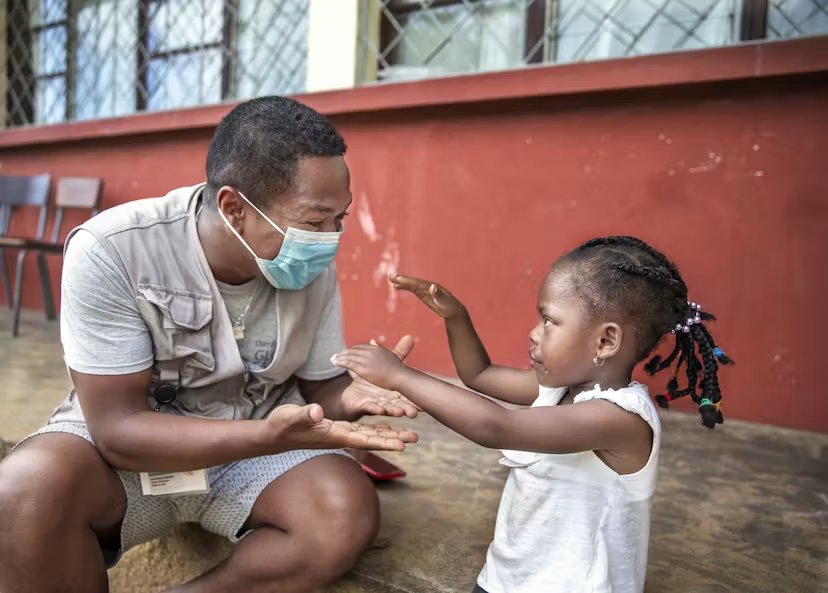
For Eli Zakariasy, this work is deeply personal. He grew up in Moramanga, a small town along the road to Tamatave, where neighbors know each other by name and community comes first. It is a place, he says, “where you can walk in the main street barefoot, and no one will judge you. People care more about your heart than your appearance.”
That spirit shapes his leadership as Operation Smile’s nutrition and psychosocial program officer in Madagascar. After volunteering during a surgical program in 2015, Zakariasy saw firsthand how many children needed additional nutrition support before they could safely receive surgery. He recognized that nutrition was not separate from care; it was the first step toward it.
Today, he leads locally driven efforts, including nutrition bootcamps held every six weeks, where families receive therapeutic formula, feeding guidance and hands-on training. By working alongside caregivers, community health workers and volunteers, Zakariasy and the rest of the team are helping children gain the strength they need for safe surgery and long-term health.
We spoke with Zakariasy on why nutrition is foundational to comprehensive cleft care and how community-based support is transforming lives across Madagascar.
What inspired you to work in nutrition?
For me, the most painful moment during a surgical program is seeing a child not being able to receive surgery because of nutritional problems. Parents feel hopeless. They think their child will never get surgery because they have nothing to give them. This deeply touched me. I want to bring hope where it feels lost. Helping these families gives them a second chance and showing them that their children also deserve the right to safe surgeries.
Why is nutrition such a critical part of comprehensive cleft care?
Nutrition is the foundation. A patient cannot receive safe surgery if their body is too weak. Good nutrition helps children grow, fight infections and heal well after surgery. For children born with cleft, feeding is often difficult. Without support, they can quickly become severely underweight or even […] die. So, Nutrition is not just crucial, it’s lifesaving.
What would you like people around the world to understand about the connection between nutrition and safe surgery?
I would like people to know that surgery is not just about operating rooms, surgeons and anesthesia. It starts a long before. A child needs strength to handle anesthesia and recovery. Therefore, good nutrition makes surgery safer and heal faster. When we support a patient with nutrition, we already prepare his path to a successful surgery.
What are some of the most common nutrition challenges faced by children with cleft conditions in Madagascar?
Many children with cleft conditions struggle to latch, suck [and] swallow, or [get] enough breast milk. Caregivers, especially in Madagascar, don’t have access to special feeding tools (bottles, nipples, breast pumps, cups). Others cannot afford enough nutritious and healthy food. Because of this, many children become underweight very quickly, and some face repeated infections.
How do you collaborate with local health care providers and community leaders to support families?
One of the main goals of our nutrition program in Madagascar is early intervention. We try to identify patients and their needs as early as possible so we can act fast, provide the right care and avoid complications. To do this, we created a program called PNC (Proximity Nutrition Care) to bring care to our patients’ home. We closely work with local health facilities, midwives and community health workers. They help us identify patients early, guide families to our support and follow up with them. We want to reach even the most remote places, because every child deserves care no matter where they live.
How does global support — including training, shared expertise and resources — strengthen the work you are leading in Madagascar?
We cannot do this work without global support. Thanks to the training available on Operation Smile Academy, our volunteers grow their skills and can provide better care to patients. Workshops and exchanges also help us learn from other countries and use what works best to improve our own program. And of course, we could not donate supplies or help families without the resources we receive, whether financial or material. Because of this support, patients from Madagascar receive safer and higher quality care.
Can you share a story of a patient or family whose life was transformed through nutrition support?
I remember a very small baby from a village in the east of Madagascar. She had severe malnutrition. She was 9 months old but weighed only about 2 kg [about 4 lbs.] when she joined one of our nutrition bootcamps in Antsirabe. Her mother was scared and felt alone. Even our volunteers were shocked by how fragile the baby was. But since we believe in every child’s life matters, together with our volunteers, we did everything we could to save her. We gave nutrition support and taught the mother how to feed her safely. It was not easy; it took time. It was one of the longest cases we ever had in the nutrition program. Little by little, the baby gained weight. Years later, she became strong enough for surgery. I will never forget her mother’s tears of joy. Moments like that remind me why our work matters. We don’t just treat children; we save lives.
How do you help families navigate the emotional stress that can come with feeding challenges?
I am a good listener. I love listening to people’s stories. I appreciate the fact that they trust me enough to share their hardest to their happiest moments. Most of our patients’ caregivers just need someone to hear them without judgement. I encourage them, remind them they are doing their best and show them their progress even if it’s a small one. Sometimes, giving emotional support is as important as giving nutrition support.
What makes you most proud of the nutrition work happening in Madagascar?
I am proud that we never give up, even during the hardest times. I am proud of every child who grows stronger and every parent who finds hope again. I am proud of our amazing team: volunteers, staff, global support and all our partners who stand with us to support the most vulnerable patients and families. But what makes me proud the most is seeing a healthy child graduate from the nutrition program smiling after surgery. That smile represents months, years of hard work, love and care.
If you could share one message as we celebrate National Nutrition Month in March, what would it be?
It would be: “Good nutrition is a gift of life, and every child deserves that gift. Even a small support can change a child’s future.”
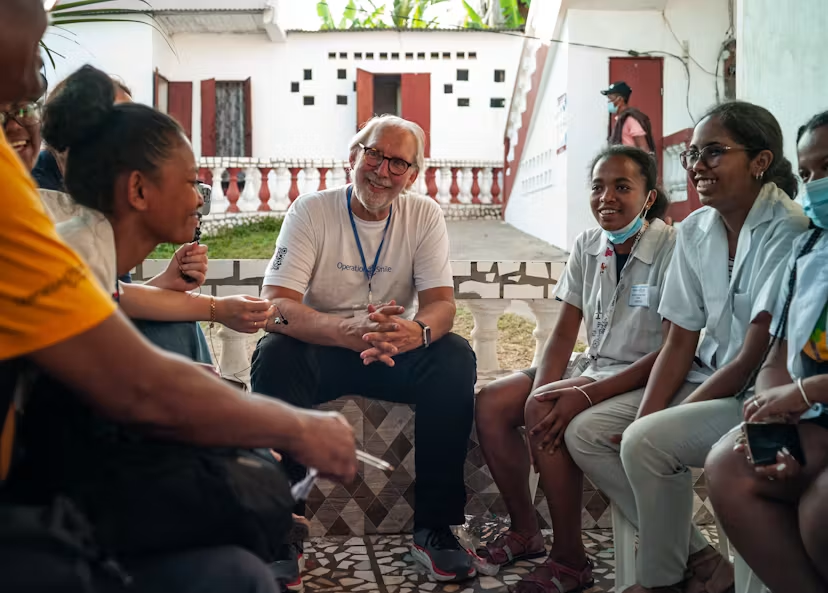
– Det er rørende å se selvtilliten de får etter operasjonen
– Arbeidet til Operation Smile gir meg mulighet til å gjøre en reell forskjell i verden. Å bekjempe stigmatisering, skam og gi mennesker følelsen av å være en del av samfunnet er meningsfylt og gir mye energi.
Det sier Carl-Erik Grimstad. Til daglig jobber han som førsteamanuensis og direktør for samfunnskontakt ved Høyskolen Kristiania. Han er forfatter, og noen kjenner han nok best fra hans tidligere jobb i kongens stab. Fra 2017 til 2021 var han Stortingsrepresentant i Helse- og omsorgskomiteen.
– På slutten av et langt arbeidsliv vil jeg bruke min erfaring til å hjelpe andre på frivillig basis. Operation Smile har et omfattende internasjonalt engasjement basert på frivillig arbeid og spiller en viktig rolle i å tilby spesialisert behandling til mennesker som ellers ikke ville fått det, enten på grunn av økonomiske begrensninger eller manglende medisinsk tilbud. For meg betyr det mye å bidra til at barn og voksne kan smile igjen, sier han.
Nøkkelen er tidlig behandling
Kirugisk operasjon av leppe-, kjeve- og ganespalte bør starte tidlig etter fødselen for å gi best mulig resultat på tale, bittutvikling og utseende. Tidlig behandling gir barn muligheten til å utvikle seg normalt og unngå de medisinske, ernæringsmessige og sosiale utfordringene som ubehandlet spalte kan føre til.
– I Norge er det årlig mellom 100 og 130 barn som fødes med leppe-, kjeve og ganespalte, men de behandles raskt og kan leve som normalt. I lavinntekstland, hvor vi i Operation Smile opererer, behandler vi mange barn på kort tid hver gang vi er på oppdrag. Under et oppdrag nord på Madagaskar i oktober 2022, hvor jeg var så heldig å få være med på som observatør, ble for eksempel 116 barn operert på under en uke.
– I mange lavinntekstsland mangler befolkningen kunnskap om tilstanden og tror ofte deformiteten er smittsom eller et resultat av en forbannelse. Det fører til utenforskap i familien, sosiale relasjoner og arbeid, og har store konsekvenser for dem som rammes, sier Carl-Erik.
På Madagaskar møtte Carl-Erik flere familier som hadde opplevd å bli utstøtt av sine nærmeste og samfunnet. Blant disse en modig mamma som var der med barnet sitt. Hun burde ha vært operert for sin leppespalte tidligere, men pandemien hadde ført til en uheldig utsettelse.
– Hun kom fra en liten landsby, og ble klandret av mannen sin for at barnet ble født med en deformitet. På egenhånd fant hun Operation Smile, og da barnet ble operert, ble hun ubeskrivelig lykkelig. Folk ved sykehuset samlet seg rundt henne for å høre hvordan det hadde gått. Det var utrolig å se hvordan operasjonen påvirket både mor og barn. Det handlet ikke bare om å redde ett liv, men en familie, sier han.
– Sammen kan vi utgjøre en forskjell
Operasjon representerer for mange en ny start. Rørende møter mellom familier på sykehuset og takknemmelighet preget Carl-Erik sitt besøk på Madagaskar.
– Jeg har aldri vært vitne til at folk har gått fra å skamme seg til å utstråle selvtillit så fort. Det viser tydelig at det betyr enormt mye for folk å være en del av fellesskapet.
Operation Smile har en god rutine under oppdrag. Den innebærer medisinske vurderinger, individuelle konsultasjoner fra en rekke spesialister, og operasjoner som vanligvis varer mindre enn én time.
– Målet er å operere så mange som mulig. Hvis vi ikke kan tilby operasjon, for eksempel på grunn av underernæring eller en helsesituasjon som ikke tillater det, følger vi opp med undersøkelser og ernæringspakker. Da kan vi ofte operere dem på neste oppdrag, sier han.
Kostnaden for å utføre medisinske operasjoner på pasienter med leppe-, kjeve- og ganespalte kan være på flere millioner. Takket være frivillige, lokale helsearbeidere og donasjoner, kan oppdragene likevel gjennomføres og gi mange en ny start på livet.
– I Operation Smile fokuserer de også på å dele kirugisk kompetanse med de landene de opererer i. I Madagaskars hovedstad har de etablert en spesialisert fløy ved Joseph Ravoahangy Andrianavalona Hospital, landets nasjonalsykehus, som hjelper dem med å håndtere den store køen av tilfeller med leppe-, kjeve- og ganespalter. I tillegg gir de medisinstudenter muligheten til å delta i Operation Smile oppdrag for å inspirere dem til å spesialisere seg innen spaltekirurgi, sier han.
Realiteten er brutal, for uten midler til å gjennomføre operasjoner er det mange som blir tvunget til å leve ulykkelige liv i utenforskap.
– Dersom det er bedrifter som ønsker å vite mer om hvordan de kan bidra til Operation Smile, er det bare å ta kontakt med norge@operationsmile.org
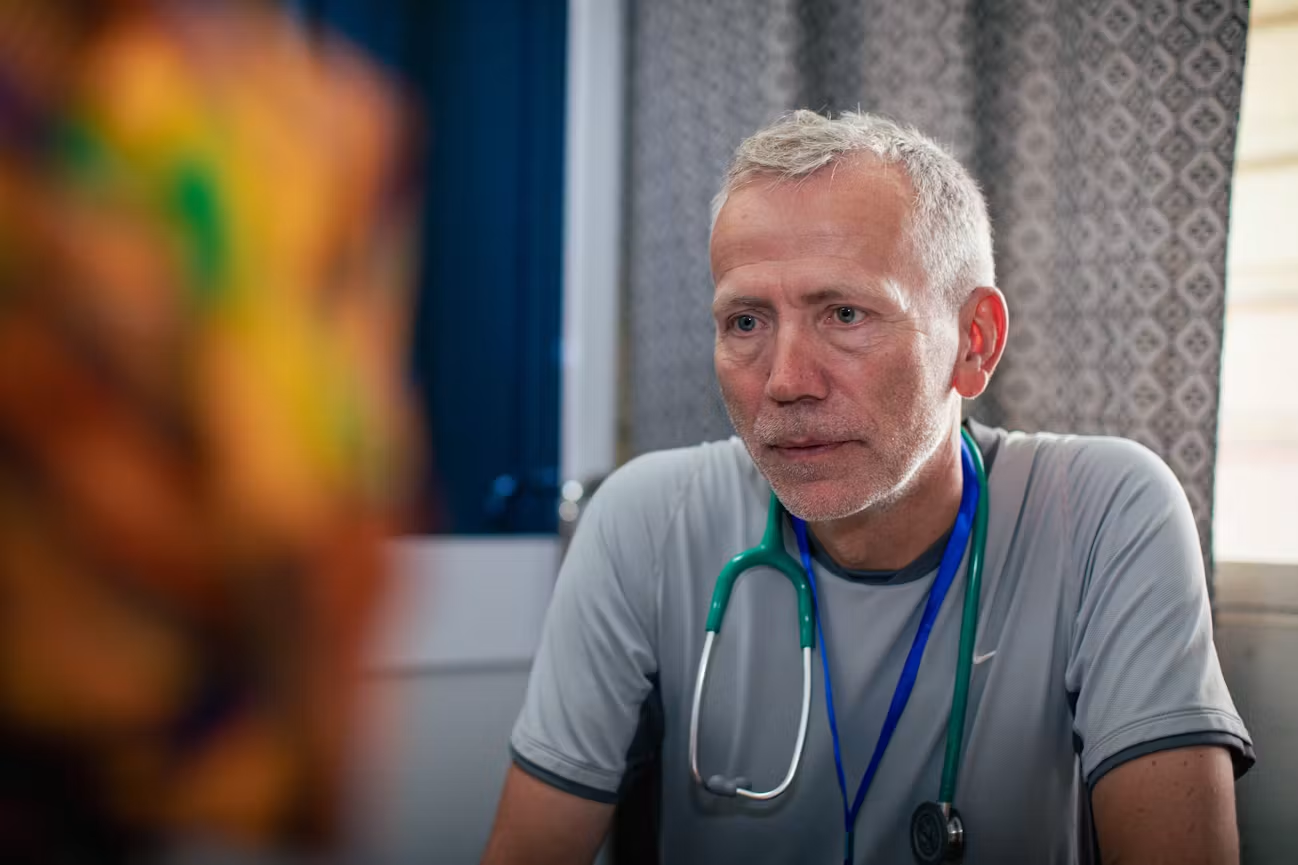
– Arbeidet er utrolig meningsfylt
– Ofte er det ikke bare leppe-, kjeve- eller ganespalten som gir folk utfordringer, men utenforskapet det fører med seg.
Det sier Mårten Sandberg. Han er anestesilege og styremedlem i Operation Smile Norge, og har vært på flere oppdrag med organisasjonen. Hovedoppgavene hans under oppdragene er å vurdere, undersøke og være med på å velge ut hvilke pasienter som skal opereres.
– Jeg ønsket å bidra som frivillig på en eller annen måte og så at behovet for operasjoner var stort. Det var en kollega som fortalte om Operation Smile og i 2017 dro jeg på mitt første oppdrag. Før dette var jeg usikker på om de
ønsket eldre frivillige, jeg var jo 57 år gammel, men erfaring har vist seg å være en stor fordel, sier han.
Til daglig er han overlege på Luftambulanseavdelingen ved Oslo universitetssykehus og spesialist i anestesiologi på sykehuset i Drammen. Takket være stor fleksibilitet fra arbeidsgiverene har han hatt anledning til å delta på over 20 oppdrag med Operation Smile. Det har brakt ham til totalt 13 land, blant annet Madagaskar, Ghana, Honduras og India. Enkelte av landene har han besøkt flere ganger.
– I november drar jeg til Casablanca i Marokko for mitt neste oppdrag. Vi skal være der en uke, og gjennomføre operasjoner og medisinske vurderinger sammen med flere frivillige helsearbeidere fra flere land, sier han.
Samarbeider tett med de lokale
– Utvelgelsen av pasienter er avgjørende for å sørge for at vi har kapasitet til å behandle dem. Vi tar alltid med oss nødvendig utstyr i tilfelle noe mangler. Uansett hvilke forhold vi møter går vi ikke på kompromiss med kvaliteten på hver enkelt operasjon, forteller Mårten.
Ute i felt er det alltid tett samarbeid med andre erfarne frivillige og lokalt helsepersonell. Den tette kontakten er viktig for kunnskapsoverføring og opplæring av lokale ressurser, og det er mange av de lokale frivillige som allerede har høy kompetanse på området. Å tilby grundig opplæring og dele kunnskap spiller en sentral rolle i å øke kapasiteten, slik at de får bedre forutsetninger til å håndtere utfordringene på egenhånd.
Studier viser at det dør flere mennesker av mangel på kirurgi enn det sammenlagte antallet som dør av malaria, AIDS og tuberkulose. Det understreker det store behovet for kvalifiserte leger og sykepleiere.
Mårten Sandberg
– Vil fortsette så lenge jeg kan
Operation Smile er avhengig av frivillige helsearbeidere for å gjennomføre livsendrende operasjoner og gi omsorg til barn og voksne slik at de får muligheten til et bedre liv. I Norge har Operation Smile 15 frivillige leger og annet helsepersonell som reiser verden rundt. Det er disse frivillige som sammen med lokalt helsepersonell og donasjoner gjør oppdragene mulige og bidrar til en ny start på livet for mange. Innsatsen til de frivillige er ulønnet, noe som gjør Operation Smile til en av verdens eldste og største medisinske veldedighetsorganisasjoner.
– Personlig opplever jeg erfaringene fra oppdragene som svært verdifulle. Å bidra til internasjonalt helsearbeid gjennom Operation Smile har blitt en viktig
del av min identitet. Fordi det er så enkelt å kombinere med familieliv og karriere, vil jeg absolutt anbefale dette til alle som har lyst til å bidra, sier Mårten.
Ekskludering er ofte resultatet for barn med leppe-, kjeve eller ganespalte. Av og til er ansiktsdeformitetene så alvorlig at de er direkte livstruende.
Operation Smile bruker frivillig helsearbeid til å utføre operasjoner som gir barn og voksne mulighet til å leve et bedre og meningsfylt liv.