From First Feed to First Smile
Operation Smile Norway and Laerdal Global Health are working together to strengthen the pathway that helps newborns with cleft conditions survive,
grow stronger and reach safe surgery.
For many newborns with cleft conditions, the greatest risk is not the surgery itself.
It is surviving long enough to reach it.
A baby born with a cleft condition often cannot latch, which creates barriers to breastfeeding from the very first day. Without appropriate feeding support, malnutrition can follow, weakening a child’s immune system, growth, and development. And a child who is malnourished cannot safely receive cleft surgery.
This is why nutrition support is a core part of Operation Smile’s comprehensive care model. Health workers train caregivers to feed babies who cannot latch, and the Nifty Cup from Laerdal Global Health is one of the most important tools in that work. A simple intervention that not only helps close the gap between birth and surgery, but saves lives.
Small cup.Big future.
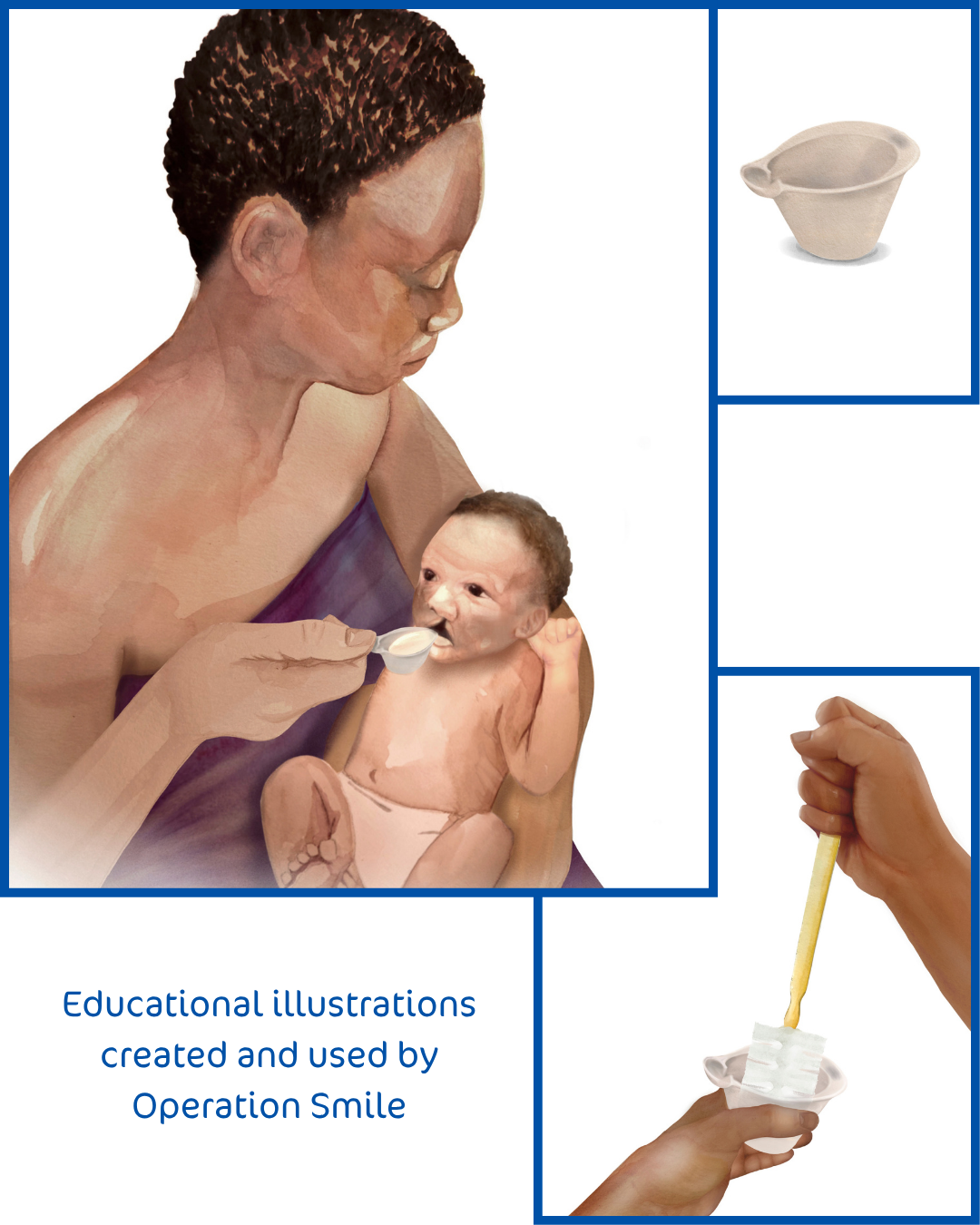
The Nifty Cup is a reusable silicone feeding cup, 17 grams, designed for newborns who face barriers to breastfeeding. A mother expresses her own breast milk into the cup, and her baby feeds from the soft reservoir at their own pace. It can be sterilised by boiling and reused, which matters in settings where sterile single-use equipment is out of reach.
It was developed by PATH, the University of Washington School of Dentistry and Seattle Children’s Hospital, and is manufactured by Laerdal Global Health at not-for-profit prices for low- and middle-income countries. Operation Smile teams have used it in nutrition programs for years.
Later this year, Nifty Cups carrying both organisations’ names will reach Operation Smile programs. It is a small, practical step in a partnership built around one goal: making sure access to feeding and adequate nutrition never stands between a newborn and surgery.
The pathway to surgery begins with feeding
Operation Smile cannot operate on babies and children who are malnourished. Surgery on a malnourished child carries serious risks of complications, so patients must meet minimum weight and nutrition thresholds first.
That makes feeding one of the first steps of cleft surgical care, not a separate concern.
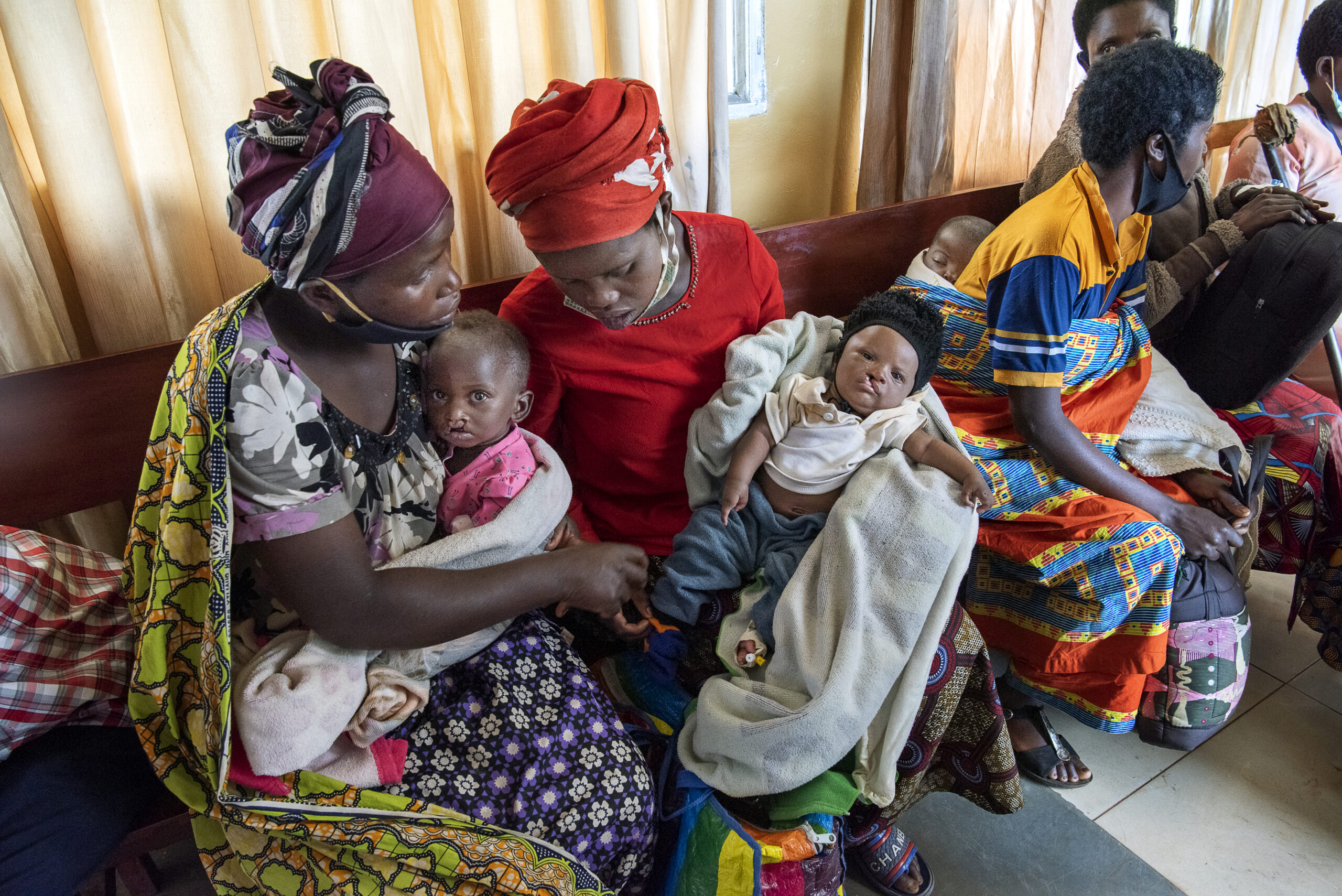
Every year, around 200,000 children are born with cleft conditions. In some low-resource settings, these babies are estimated to be up to nine times more likely to die in their first year without access to feeding support, nutrition and care.
Breastfeeding requires suction, and a cleft condition often makes creating this suction impossible. Globally, nearly 600,000 children under five die each year when adequate breastfeeding is out of reach. For babies with cleft conditions, the risk is immediate and acute.
A malnourished child cannot safely receive an operation. Without intervention, the condition that makes feeding difficult becomes the reason surgery stays out of reach. We estimate more than 118,000 malnourished infants and children under five are living with cleft conditions globally, and for every child identified, there are likely five more.
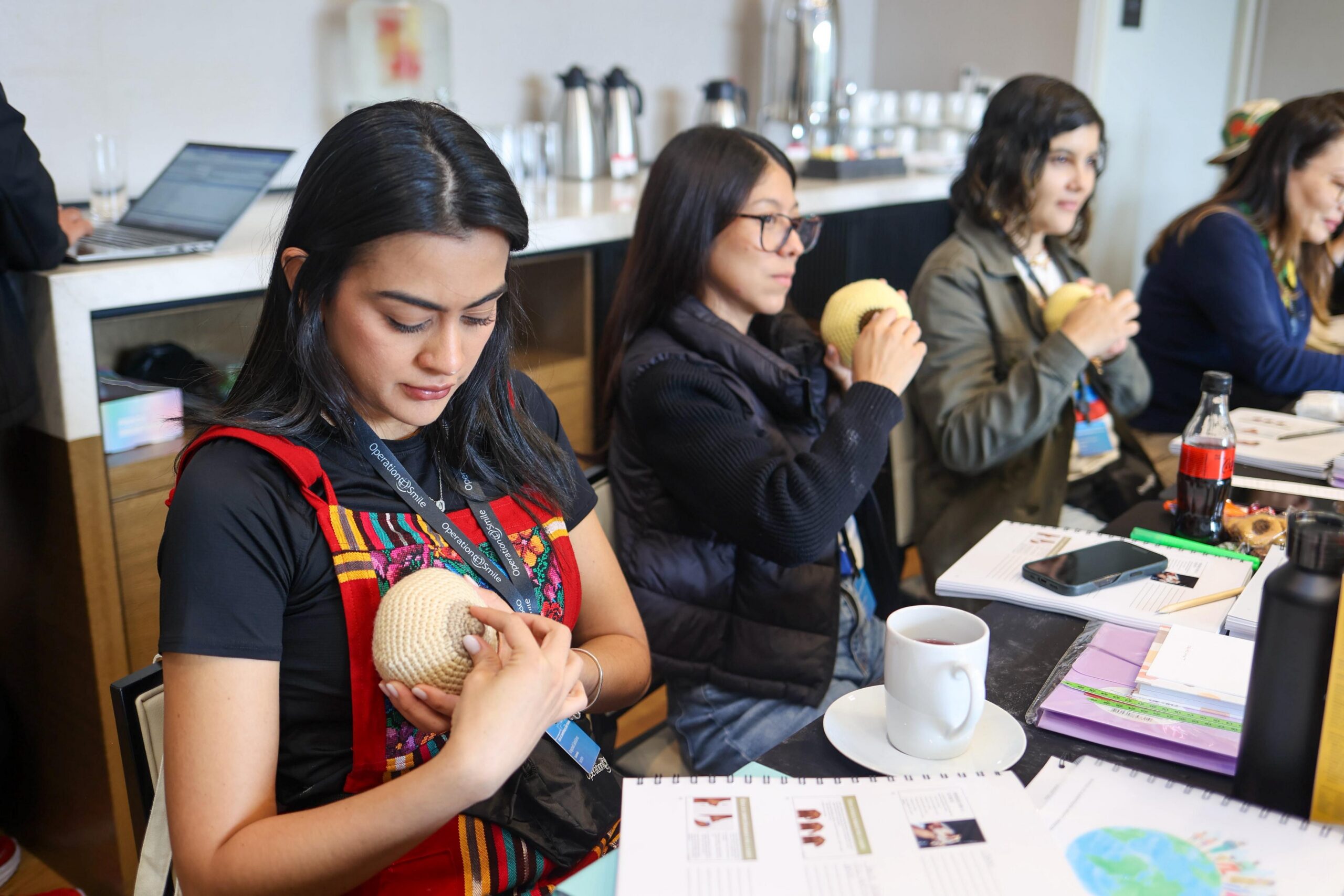
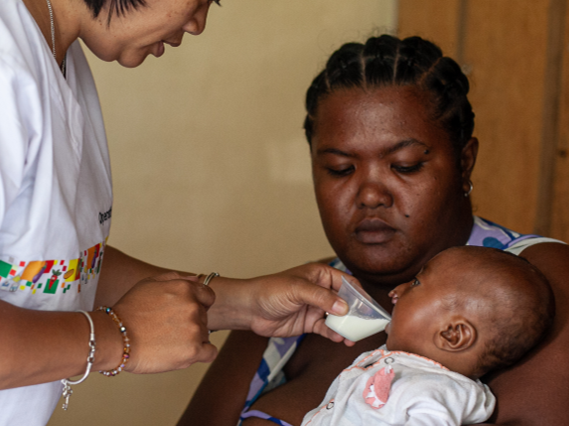
With a Nifty Cup and guidance from a trained health worker, a mother can feed her baby her own breast milk from day one. The child gains weight, stays healthy and becomes ready for surgery. Operation Smile’s nutrition teams provide assessment, follow-up and caregiver education at every step, with in-country nutritionists available year round.
Cleft surgery takes as little as 60 minutes and is free for the family at the point of delivery. Comprehensive care follows: speech therapy, dentistry, psychosocial support and nutrition follow-up. Over the next five years, Operation Smile will provide nutrition care to more than 60,000 patients.
Feeding today. Surgery tomorrow. A smile for life.
9x
higher risk of death in the first year for babies with cleft conditions in some low-resource settings.
45%
of deaths in children under five have malnutrition as a contributing factor.
118,000
malnourished infants and children under five are living with cleft conditions globally.
Laerdal Global Health, headquartered in Stavanger, develops durable, affordable newborn care and training tools used in more than 95 countries, and has trained over 500,000 birth attendants. Operation Smile trains health workers, delivers safe surgery and provides comprehensive cleft care in 37 countries, working alongside ministries of health and local clinical teams. Laerdal equips. Operation Smile trains and operates. Neither organisation closes the loop alone.
Both organisations were founded on personal experience. Operation Smile began when Dr. Bill Magee and Kathy Magee realized thousands of children were living with untreated cleft conditions in the Philippines in 1984; more than half a million safe surgeries later, their children work across the organisation's clinical and strategic leadership. Laerdal's commitment to newborn survival traces back to a formative experience in founder Åsmund Laerdal's own family; and his son Tore went on to found Laerdal Global Health. Two family stories, one shared conviction: where a child is born should never determine whether they survive.
The collaboration connects Laerdal's ambition to help save one million lives every year by 2030 with Operation 100, Operation Smile's commitment to strengthen 100 hospitals in low- and middle-income countries by 2030, bringing safe surgical care within a two-hour reach of 500 million people.
The partnership
Two Norwegian organisations, closing the loop together.
Operation Smile is proud to work in collaboration with:
What your support builds
800 NOK: the first feed
Breastfeeding supplies for one mother and her baby, including specialty feeding equipment, hygiene supplies and printed guidance.
1 800 NOK: the pathway
A mother and her baby attend an Operation Smile nutrition program, with feeding support, monitoring and education.
2 400 NOK: the smile
The average cost of one cleft surgery. All surgeries are free of cost for the child and their family.
Join us in strengthening the pathway to surgery
This partnership shows what two Norwegian organisations can build together for newborns in some of the world’s most under-resourced settings. We develop partnerships that connect companies and foundations to concrete, measurable outcomes in global health, from products and programs to long-term collaboration.